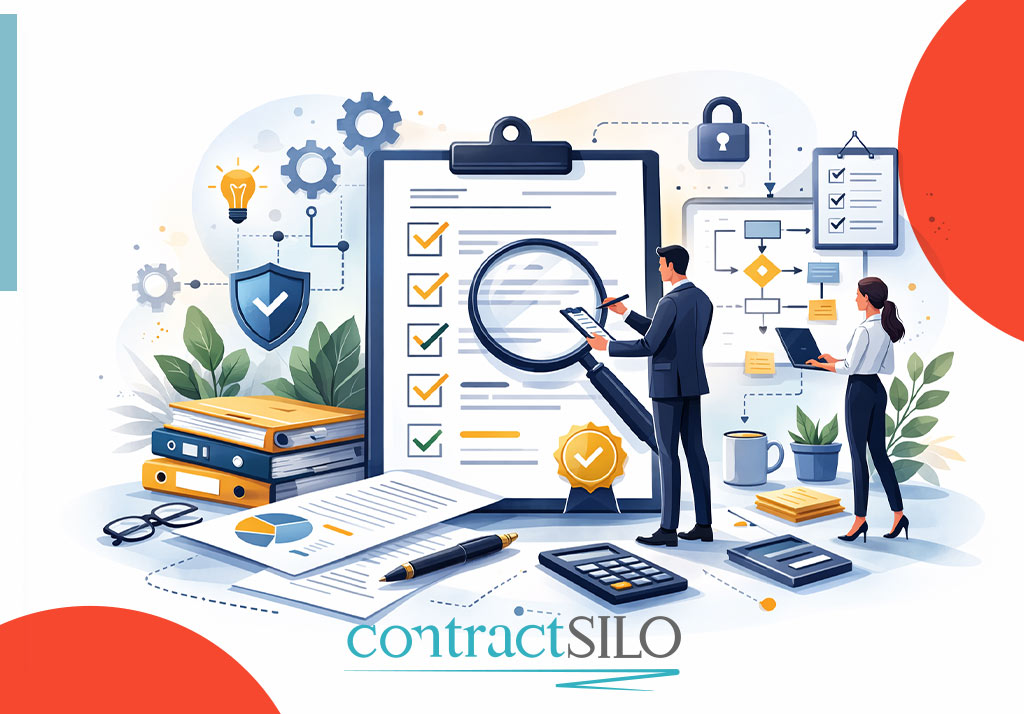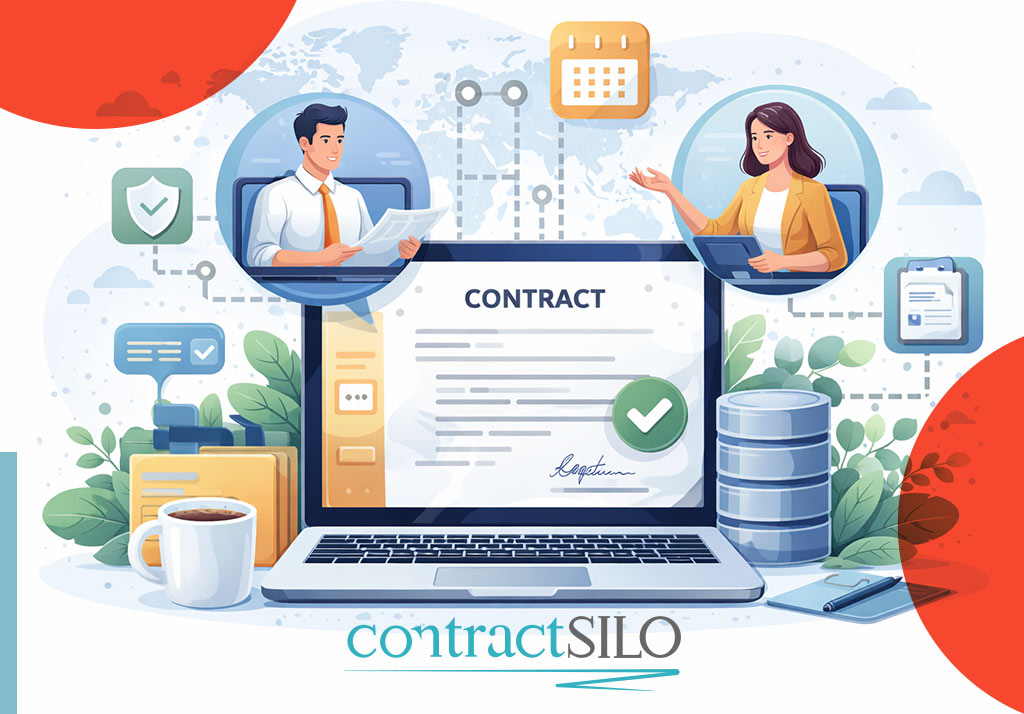
Paper feels safe. You can hold it, stack it, stamp it—then lose it, reprint it, and file it again. For contract-heavy organizations, those rituals quietly inflate costs, slow decisions, and create opaque audit trails. In 2025, leadership teams are asking a different question: How do we convert paper-heavy contract work into measurable performance—without losing compliance or control?
This article explains how moving to a digital Contract Lifecycle Management (CLM) stack turns sustainability goals into day-to-day practice, shortens cycle times, and produces the auditable metrics ESG reports demand. We’ll cover the “E” and “G” of ESG specifically, the operational wins that arrive when you go paper-light, and a pragmatic 30-day checklist to get there fast.
Why contracts are ESG’s missing link
-
Environmental (“E”). Every printed draft, couriered copy, and off-site archive adds material and transport waste. If a company executes 1,000 agreements a year and each draft cycle historically produced 50 printed pages across three versions, that’s 150,000 pages—before final signature packets. Digitizing reviews, approvals, and signatures via integrations replaces this with a trackable digital flow.
-
Governance (“G”). Governance is the ability to prove who did what, when, and under which authority. Paper trails are brittle; digital CLM provides audit-ready logs, version histories, and permission models.
-
Social (“S”). Online collaboration means distributed teams and external partners can work securely, without couriers or office printers.
Paperless isn’t just greener; it’s fewer errors
Paper creates errors: missing pages, wrong versions, inconsistent updates. Digital CLM reduces these risks:
-
Single source of truth. One digital record per contract.
-
Role-based access control (RBAC). Permissions by role (Legal, Sales, Finance, Vendors).
-
Structured workflows. Step-by-step approvals reduce ambiguity.
-
E-signatures via third-party integrations. contractSILO does not provide native e-signatures, but integrates seamlessly with leading providers. This ensures you can sign without reverting to print-and-scan.
The immediate effect: faster, more reliable contracting. The subtler effect: the system “remembers” deadlines for you.
What to measure: operational KPIs and ESG-ready metrics
-
Cycle Time (Request → Signature). Faster deal closure, even more visible when e-signature integrations are enabled.
-
Touch Time vs. Wait Time. Identifies bottlenecks.
-
Rework Rate. Reveals template gaps.
-
On-Time Renewals & Notice Compliance. Prevents leakage.
-
Digital Signature Adoption (via integrations). Tracks paper/courier reductions.
Green metrics:
-
Pages avoided
-
Courier trips avoided
-
Digital archive coverage
-
Audit-log completeness
Technology ingredients that make it work
-
Third-party e-signature integrations. Flexible choice of providers, embedded in workflows.
-
OCR/LLM-assisted capture. Turns legacy PDFs into searchable records.
-
Policy-aligned archiving. Retention schedules reduce risk and cost.
-
RBAC + SSO/2FA. Secure, permission-based access.
-
Tasks, reminders, and calendars. Notice windows become actionable.
CFO view: cost, risk, and revenue
-
Saves: Paper, courier, storage.
-
Prevents: Auto-renewals, penalties.
-
Enables: Faster bookings, cleaner audits, ESG credibility.
A 30-day “paper-to-digital” checklist
-
Days 1–7: Baseline, design workflows, pick two templates.
-
Days 8–15: Pilot import, enable e-signature via third-party integration, define dashboards.
-
Days 16–23: Expand workflows, train roles, set external sharing policy.
-
Days 24–30: Lock in archive policies, publish standards, report early metrics.
Case snapshot (illustrative)
A regional services company reduced cycle time from 34 to 19 days in 60 days, avoided ~60,000 pages annually, and improved renewal compliance. Digital signing was enabled via a third-party provider integrated into contractSILO.
Common pitfalls—and how to dodge them
Avoid digital junk drawers, over-engineering, ignoring training, permission sprawl, and missing metrics.
Moving contracts from paper to digital is not about swapping printers for PDFs—it’s about turning contracts into a performance engine. With contractSILO—web-based access, role-based permissions, audit-ready logs, reminders, and seamless third-party e-signature integrations—you reduce waste, expose bottlenecks, and produce defensible ESG evidence.
FAQ
-
How do we quantify “pages avoided”?
Use conservative assumptions, keep data on file, and present ranges. -
Fastest way to cut cycle time in month one?
Standardize templates, enable e-signature integrations, enforce RBAC. -
What about wet-ink jurisdictions?
Hybrid workflows: packet generation + scanned return with metadata. -
How to stop employees exporting/emailing?
Provide watermarked, read-only links with expiry; log every access. -
Governance wins to show auditors?
Logs, retention schedules, renewal workflows with ownership.
You might also like