How to Control Project-Based Risks Before They Escalate
Construction and engineering companies do not struggle with a lack of contracts.
They struggle with contracts that evolve while projects are already in motion.
Unlike subscription-based industries, construction and engineering work is inherently project-based. Each project introduces unique stakeholders, timelines, specifications, dependencies, and liabilities. Contracts are not just agreements — they are operational blueprints that shape execution on-site and off-site.
Yet in many organizations, contracts are treated as static documents finalized at the beginning of a project and revisited only when something goes wrong.
By then, the cost is already real.
Where Contract Risk Really Starts in Project-Based Work
Most construction disputes do not start with bad intentions.
They start with assumptions.
Assumptions about scope.
Assumptions about responsibilities.
Assumptions about timelines, approvals, and change orders.
In project-based environments, multiple contracts often coexist:
-
Main contractor agreements
-
Subcontractor contracts
-
Supplier agreements
-
Engineering and design contracts
-
Change orders and amendments
When these documents are scattered across emails, folders, and local drives, teams lose alignment. Project managers rely on memory. Legal teams are consulted late. Operations reacts instead of anticipating.
The result is not chaos — it’s delayed risk.
The Illusion of “Signed Means Safe”
In construction and engineering, a signed contract often creates a false sense of security.
Teams assume that once a contract is executed, the legal work is done. But the reality is the opposite: the real risk phase begins after signature.
Milestones must be met.
Obligations must be fulfilled.
Notice periods must be respected.
Variations must be documented.
When these elements are not actively tracked, projects drift — slowly, but inevitably.
Change Orders: Where Control Is Usually Lost
Few industries experience contractual change as frequently as construction and engineering.
Site conditions change.
Client requirements evolve.
Materials fluctuate.
Deadlines shift.
Each change introduces legal and financial implications — but only if it is properly documented, approved, and traceable.
In many organizations, change orders are handled informally: emails, attachments, verbal confirmations. Over time, these decisions become disconnected from the original contract.
This is where disputes are born.
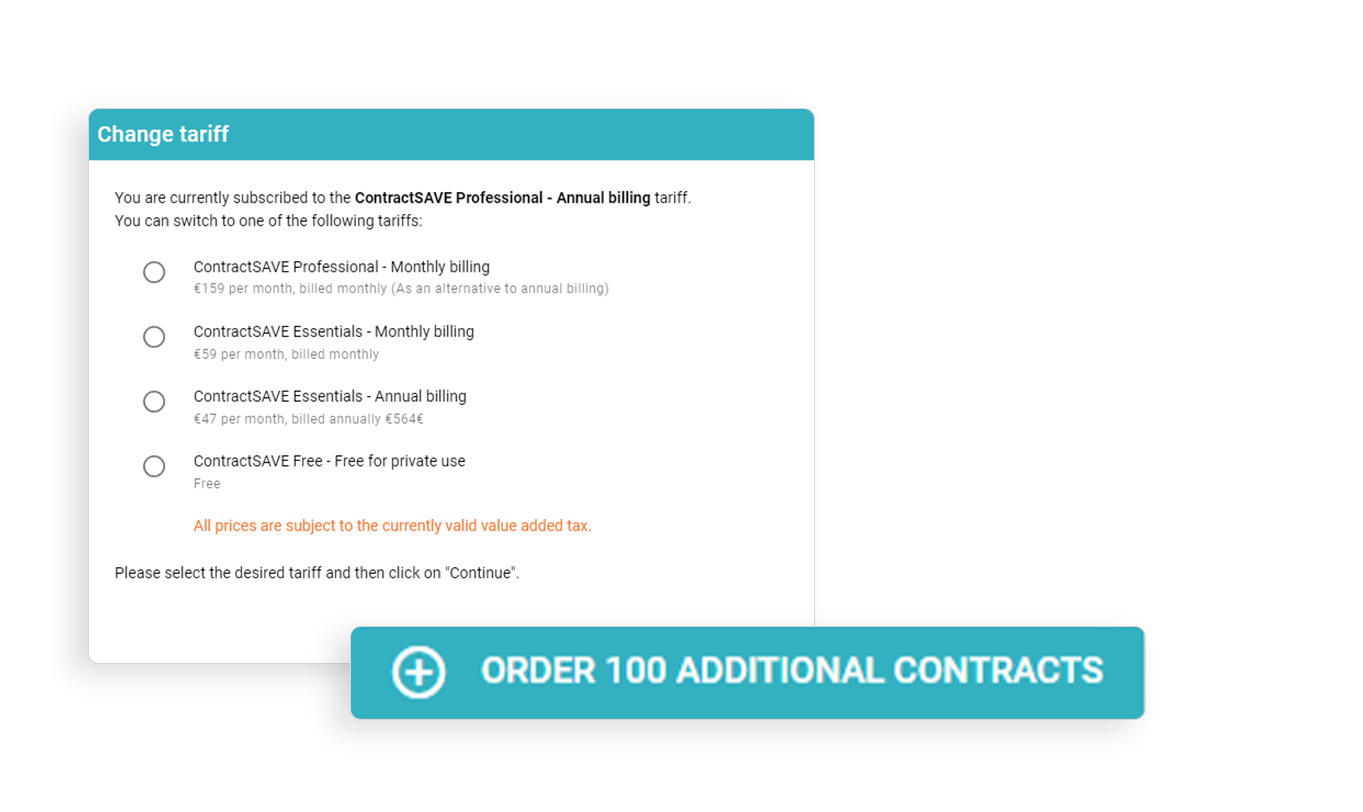
Upgrade Version
You can upgrade your version at any time.
Automatic instant upgrades.
Get more features and raise your limits.
Why Project Timelines Need Contract Awareness
Project timelines are usually managed separately from contracts. Gantt charts track tasks, but contracts define what must legally happen by when.
Milestones, penalties, performance guarantees, and termination rights are contractual constructs — not project tasks.
When contract timelines are invisible to project teams, deadlines are missed not because teams are late, but because legal consequences were never operationally visible.
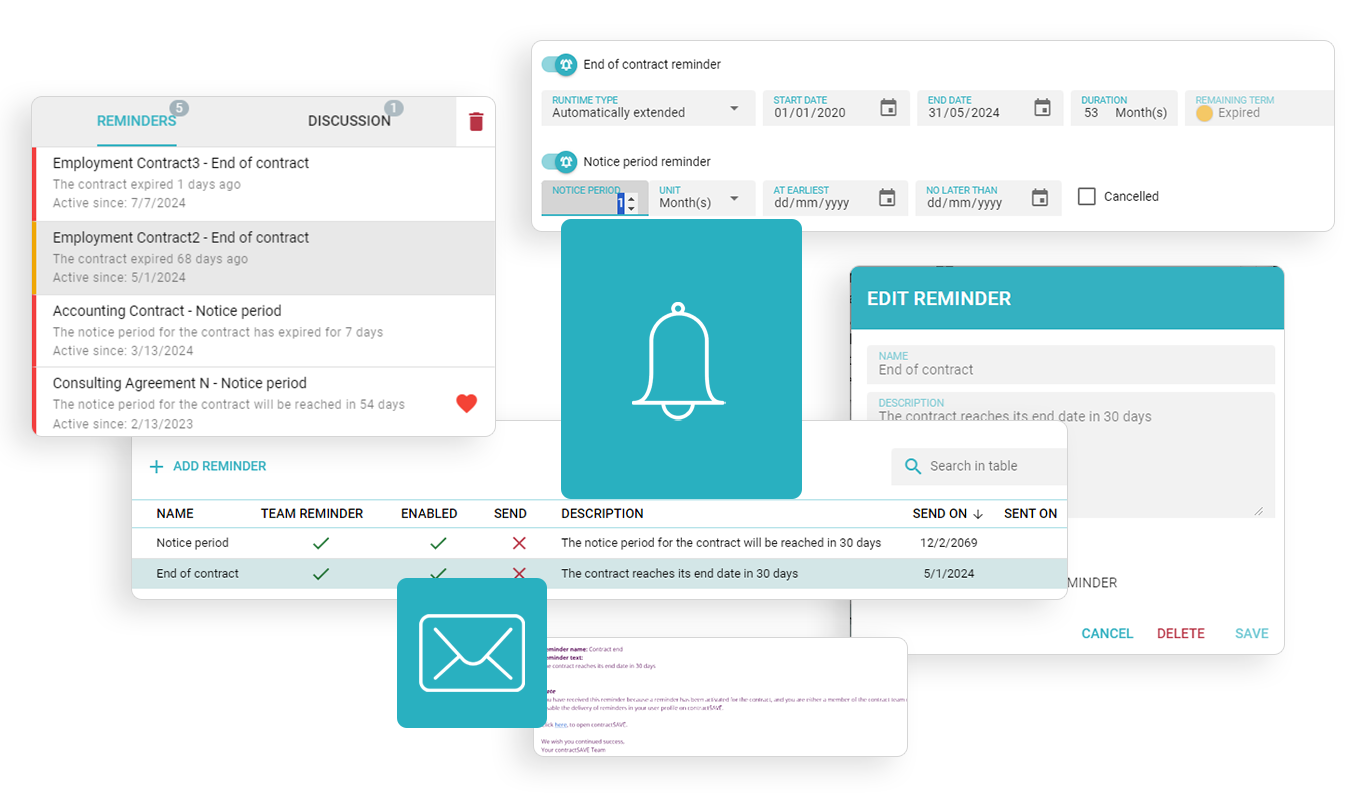
Reminders
Reminders Indicator
Get reminders by email.
Advanced Reminders Feature Ess & Pro
Accountability Across Multiple Stakeholders
Construction projects involve a web of parties: contractors, subcontractors, consultants, suppliers, and clients. Each party touches the contract from a different angle.
Without clear ownership, contracts become shared responsibility — and shared responsibility often means diluted accountability.
Who owns the obligation?
Who tracks deadlines?
Who ensures compliance before escalation?
Clear ownership transforms contracts from background paperwork into active project controls.
Documentation, Access, and Audit Readiness
Engineering and infrastructure projects frequently face audits, claims, and regulatory reviews — sometimes years after completion.
When contract history is fragmented, teams struggle to reconstruct what was agreed, when it changed, and who approved it. Missing documentation weakens claims and strengthens counterclaims.
A complete, time-stamped record is not a luxury — it’s protection.

Contract Audit
Reach the related contract with a click.
Search and download (CSV format). Pro Version
From Reactive Disputes to Preventive Control
High-performing construction and engineering organizations do not wait for disputes to validate their contract processes.
They design systems that surface risk early:
-
Obligations are visible
-
Changes are documented
-
Approvals are traceable
-
Ownership is explicit
Contracts stop being legal artifacts and become operational instruments.
FAQs
Why are construction contracts more complex than other industries?
Because each project introduces unique scopes, timelines, and dependencies.
Why do disputes often arise late?
Because obligations and changes were not tracked during execution.
Are signed contracts enough?
No. Risk materializes during performance, not at signature.
How can teams manage change orders safely?
By documenting and versioning every contractual modification.
Why is audit readiness important after project completion?
Claims and reviews may arise years later, requiring complete documentation.
You might also like