
In 2025, contract management became a defining capability for European businesses navigating regulatory pressure, operational complexity, and financial uncertainty. What was once treated as an administrative function has evolved into a core operational discipline, directly influencing risk exposure, cash flow predictability, and cross-departmental efficiency.
Rather than introducing entirely new challenges, 2025 exposed long-standing structural weaknesses in how contracts are tracked, owned, and monitored. For many organizations, the year served as a wake-up call: contracts are not static documents — they are living business assets that require continuous visibility and control.
Why 2025 Revealed the True Cost of Poor Contract Visibility
As businesses expanded across borders and departments became more interconnected, contract volumes increased significantly. Yet many organizations continued to rely on fragmented storage, manual tracking, and unclear ownership. In practice, this meant that critical contract dates, obligations, and financial terms were often invisible to the teams that depended on them most.
In 2025, these gaps became harder to ignore. Distributed teams, tighter compliance expectations, and growing financial scrutiny amplified the consequences of missed deadlines and unmanaged renewals. The result was not always immediate disruption — but gradual value loss, operational friction, and increased risk exposure.
Missed Deadlines and Renewals: A Silent Financial Drain
One of the clearest lessons of 2025 was the impact of missed renewal and notice periods. Renewals are not administrative checkpoints — they are strategic decision moments. When renewal dates are overlooked, organizations often lose negotiating leverage, extend contracts under outdated conditions, or miss opportunities to reassess vendor and customer relationships.
In many cases, deadlines were not missed due to negligence, but because responsibility was unclear and timelines were scattered across inboxes, spreadsheets, and shared folders. Without structured reminders and visibility, critical dates simply disappeared into daily operational noise.
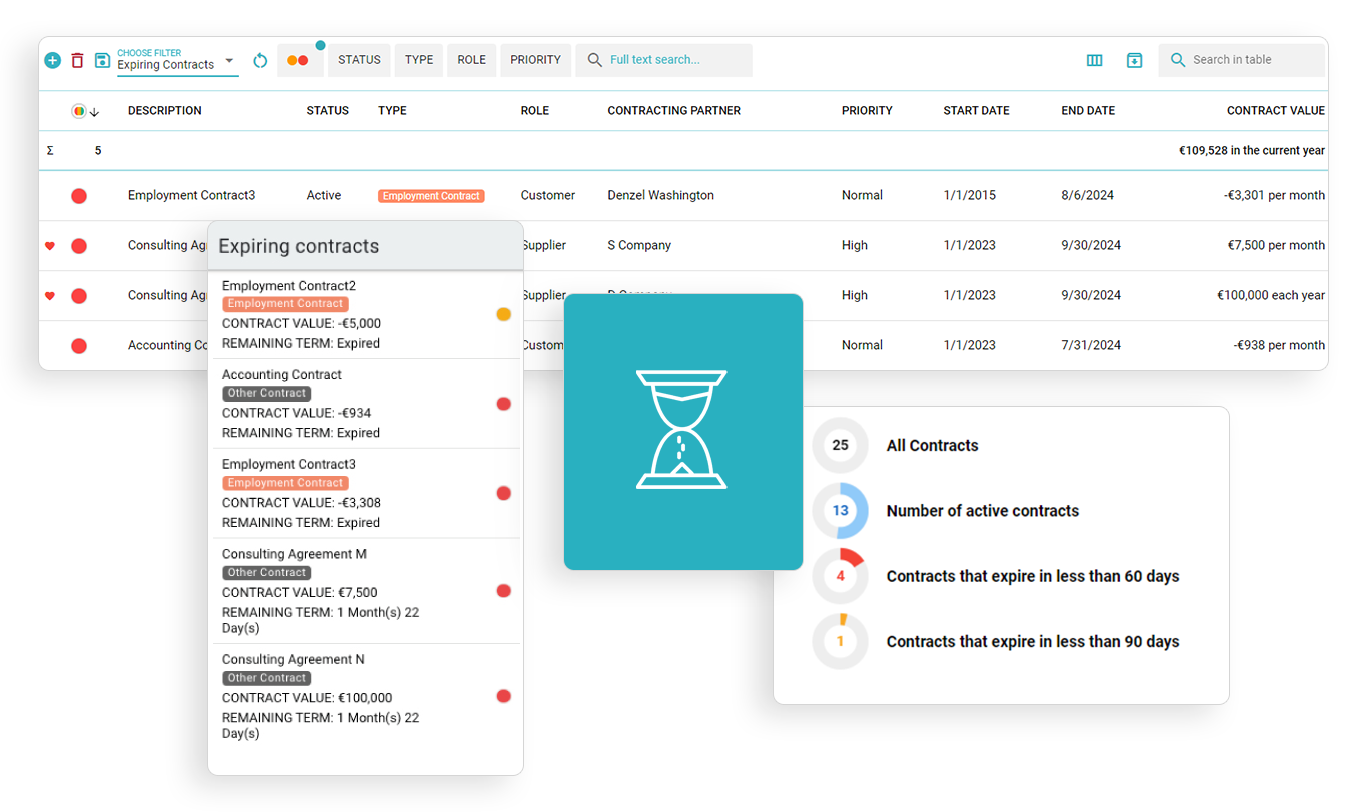
Expiring Information
Check the details of expiring contracts directly.
Reach your expiring contracts with a click.
Risk Does Not End at Signature
Another defining realization in 2025 was that contract risk extends far beyond signing. Obligations, pricing adjustments, termination rights, and regulatory requirements continue throughout the contract lifecycle. When these elements are not actively monitored, risks remain hidden until audits, disputes, or financial reviews uncover them — often too late.
Organizations that lacked clear tracking mechanisms found it difficult to prove compliance, reconstruct decision histories, or explain why certain obligations were missed. In contrast, businesses that treated contracts as auditable, traceable processes maintained stronger governance and accountability.
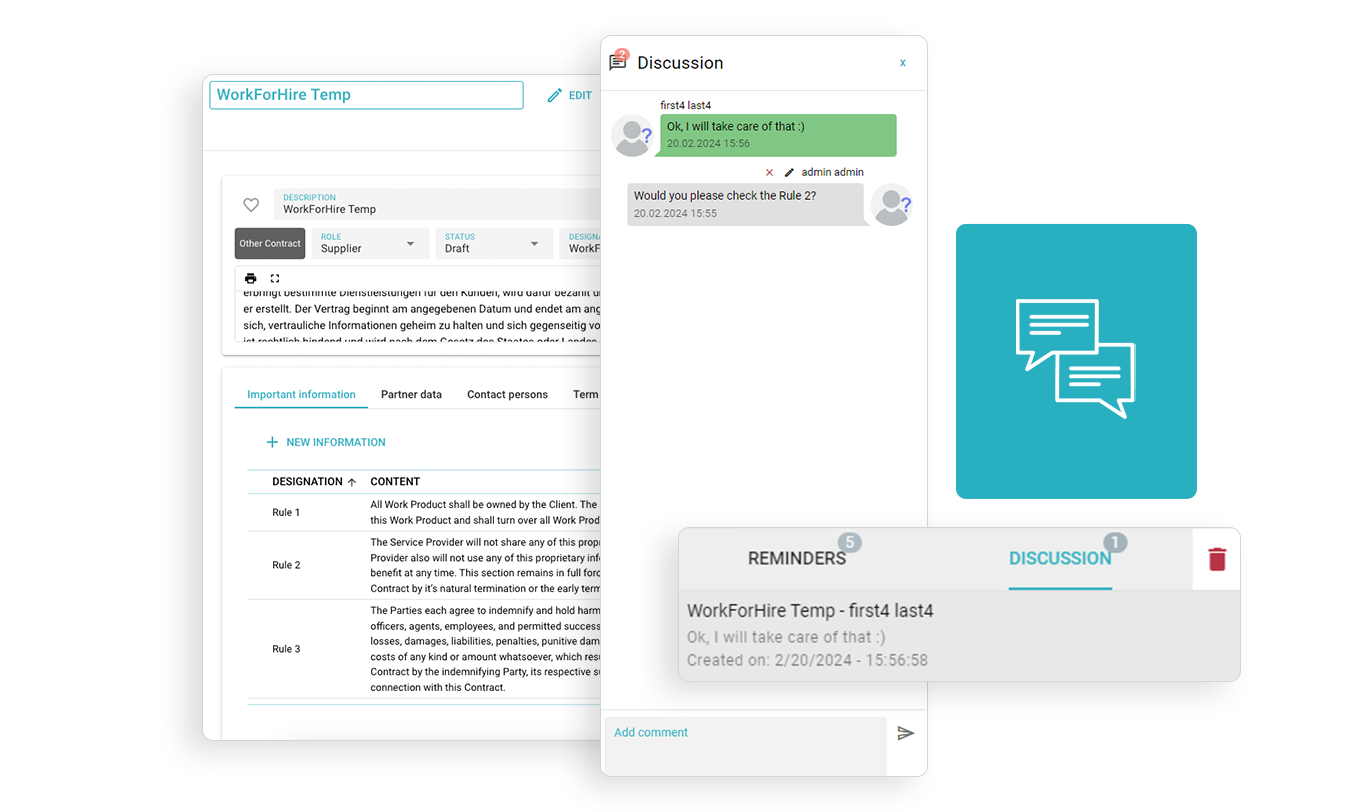
Contract Discussion
Get alerts on messages from the dashboard.
Leave messages
Select the people you want to send message New
Key Insights from 2025 Data
Industry research conducted across European and global organizations highlights consistent patterns in contract performance and risk management:

Missed renewals and compliance gaps remained the dominant sources of contract-related risk, highlighting the consequences of poor visibility and fragmented ownership.
-
Average contract value erosion due to poor visibility and manual processes remained between 8–10%
-
Low-maturity organizations experienced value losses of up to 20%
-
High-maturity organizations reduced erosion to as little as 3%
 Contract maturity directly correlates with financial outcomes, separating high-performing organizations from those experiencing silent value erosion.
-
Contract data was typically spread across 20+ disconnected systems
-
The contract lifecycle management market continued to grow at double-digit annual rates
 Sustained market growth reflects increasing regulatory complexity, contract volume, and the shift toward structured contract governance.
Sources:
World Commerce & Contracting (2024–2025 Reports)
ContractPodAi Industry Statistics
Grand View Research – CLM Market Analysis
(Data sources are referenced solely for statistical validation; analysis and interpretation are original.)
What High-Performing Organizations Did Differently
The gap between low- and high-performing organizations in 2025 was not defined by contract volume, but by structure. High-maturity companies centralized their contract repositories, standardized categorization, and established clear ownership across departments. Contracts became searchable, filterable, and consistently organized — not buried within uncontrolled folders.
This structural clarity enabled faster decision-making and reduced dependency on individual knowledge holders.
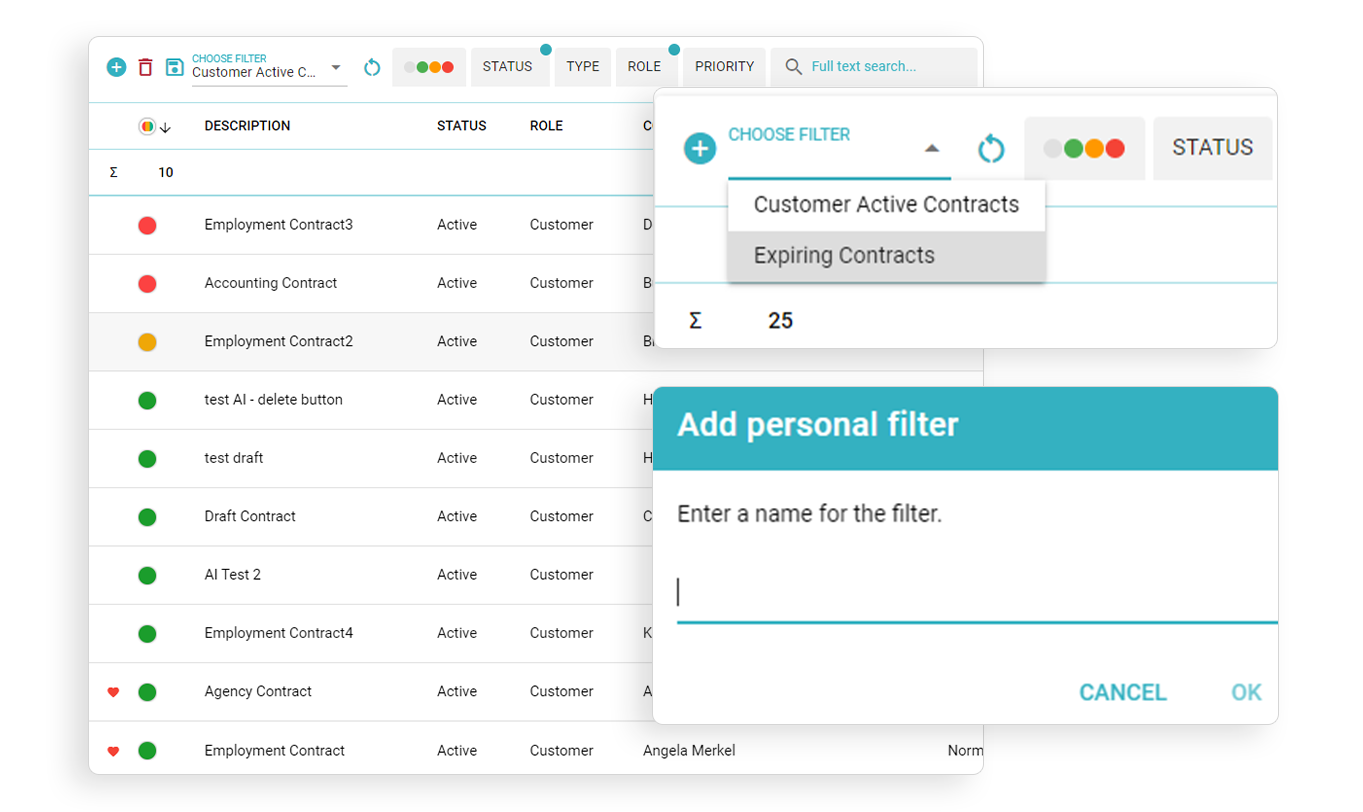
Customisable Filtering
Filter bar
Advanced filtering and grouping via multiple-choice
Contracts as Financial Intelligence
A notable shift in 2025 was the integration of contract data into financial oversight. Organizations increasingly recognized contracts as sources of real-time financial insight, not just legal records. By linking contractual terms to cash-flow forecasting and reporting, teams gained better visibility into revenue timing, cost commitments, and financial risk.
This approach allowed finance teams to anticipate cash-flow fluctuations tied directly to contract performance rather than relying on retrospective analysis.
Dashboards Replace Gut Feeling
As complexity increased, dashboards became essential tools for leadership visibility. Rather than relying on scattered reports or ad-hoc updates, decision-makers demanded consolidated views of contract status, risk exposure, and financial impact. In 2025, organizations that adopted structured dashboards gained clarity across departments and improved coordination between legal, finance, and operations.
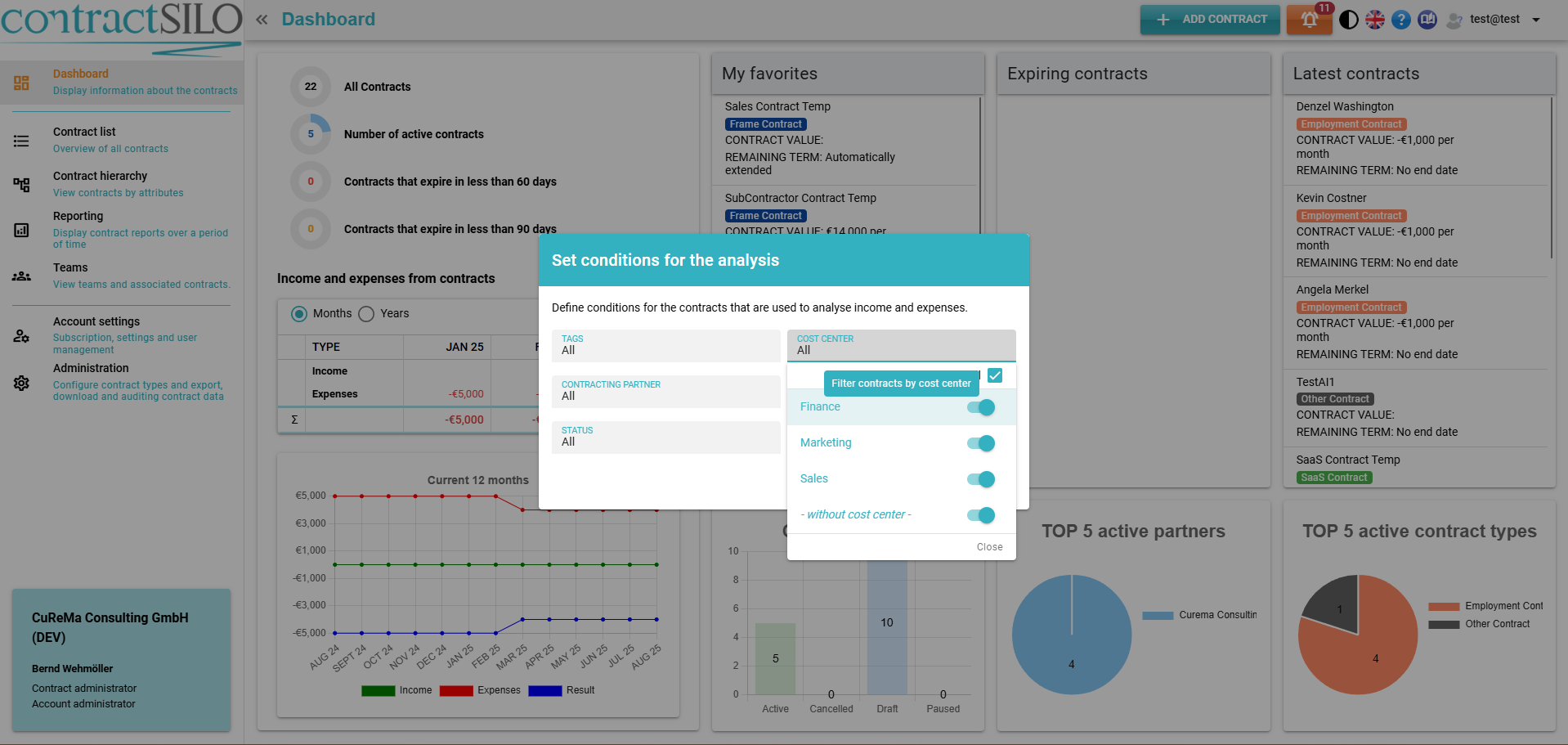
Main Dashboard Updates
The Favourite Contracts list has been configured to show new information.
Filters have been added to the Income and Expense Chart. Now income and expenses can be tracked monthly and annually according to many filters.
Looking Ahead: What 2025 Taught for 2026
The lessons of 2025 are clear. Contract management is no longer a support activity — it is an operational capability with direct impact on revenue protection, compliance, and organizational resilience. As regulation tightens and business ecosystems grow more interconnected, companies that fail to establish structured, transparent contract processes will face increasing risk.
Those that succeed will treat contracts as continuously managed assets — measurable, auditable, and aligned with financial and operational decision-making.
In 2025, European businesses learned that contract chaos is rarely dramatic — but its costs are persistent. Missed deadlines, silent renewals, hidden obligations, and fragmented data steadily erode value and trust. The organizations that emerged stronger were not those with fewer contracts, but those with better visibility, clearer ownership, and data-driven control over the entire contract lifecycle.
You might also like