IT and SaaS companies live in a constant state of motion. New customers onboard weekly. Products evolve. Pricing models change. Markets expand across borders faster than internal processes can keep up.
Contracts are created just as quickly — customer agreements, subscription terms, SLAs, partner contracts, reseller agreements, data processing addendums.
And yet, despite how critical contracts are to revenue, risk, and trust, many IT and SaaS companies manage them as an afterthought.
Not because they don’t care — but because contract complexity grows quietly, while teams stay focused on growth.
When Speed Becomes the Source of Contract Risk
In early stages, contract handling feels manageable. Sales closes deals. Legal reviews key clauses. Operations stores documents somewhere “safe enough.”
But growth changes the rules.
More customers mean more variations.
More products mean more contract versions.
More regions mean more regulatory obligations.
Suddenly, contracts are no longer simple documents — they are moving parts in a complex operational system. And the faster teams move, the easier it is to lose sight of what has already been signed.
The danger is not missing a contract.
It’s missing what the contract actually says.
The Hidden Fragmentation Behind B2B Agreements
In many IT and SaaS organizations, contracts are technically “managed” — just not centrally.
Some live in CRM attachments.
Some sit in shared drives.
Some are buried in email threads.
Some exist only as PDFs uploaded months ago.
Each department touches contracts differently:
-
Sales cares about closing speed
-
Legal cares about protection
-
Operations cares about delivery
-
Finance cares about billing and renewals
Without a shared system, collaboration becomes reactive. Questions arise late. Approvals slow down deals. Renewals turn into emergencies.
This fragmentation doesn’t look like chaos at first.
It looks like business as usual — until something breaks.
Renewals, SLAs, and the Cost of “We’ll Handle It Later”
One of the biggest risks in IT and SaaS contracts isn’t negotiation — it’s follow-up.
Service-level commitments, notice periods, renewal windows, and termination clauses all exist inside agreements, but rarely inside daily workflows. Teams assume they’ll remember. Or that someone else is watching the dates.
Eventually, “later” arrives.
A contract renews automatically on outdated terms.
A notice period expires quietly.
A customer escalates an SLA breach no one was actively monitoring.
These issues don’t come from bad contracts.
They come from contracts that are not operationalized.
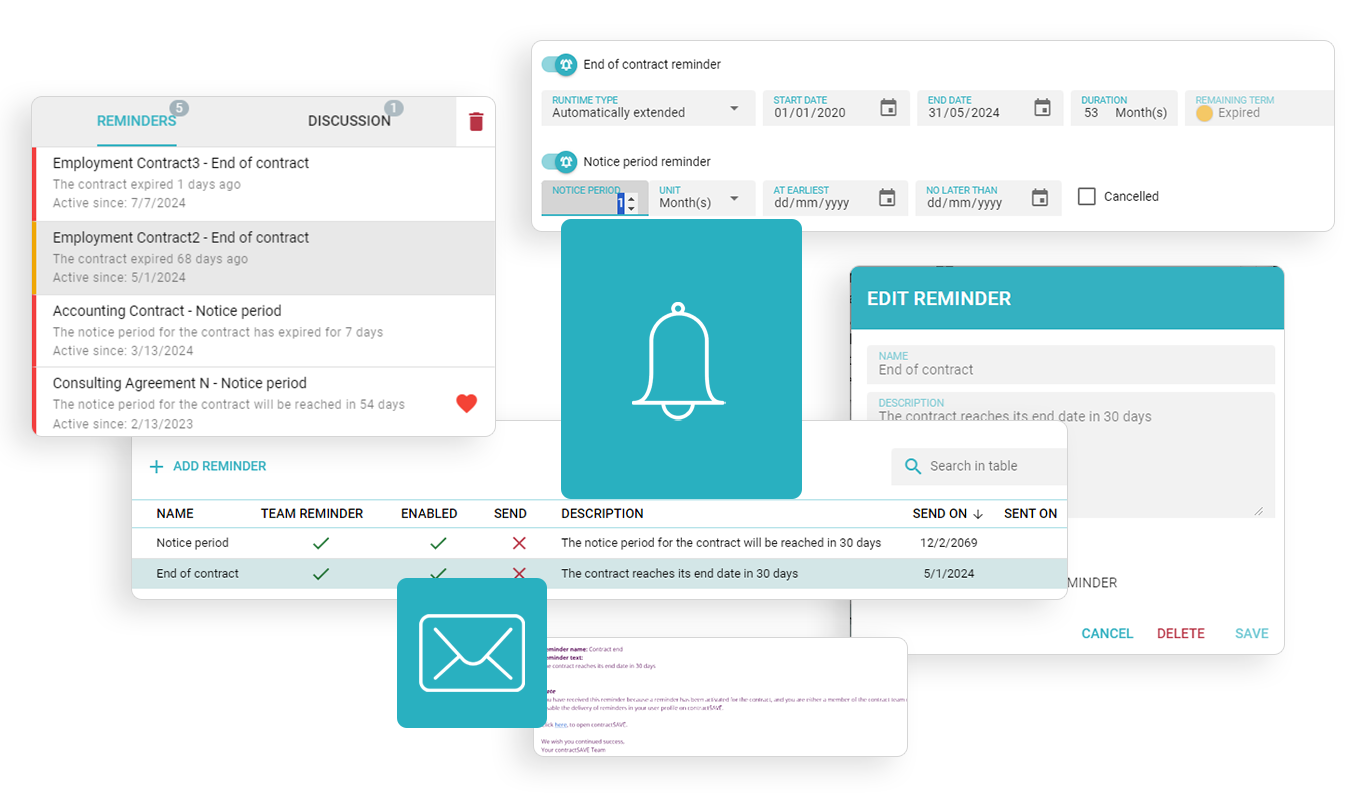
Reminders
Reminders Indicator
Get reminders by email.
Advanced Reminders Feature Ess & Pro
Why PDF Contracts Are Not Enough Anymore
Most IT and SaaS contracts still enter the organization as PDFs. They are signed, saved, and forgotten.
The problem is that PDFs are static — while SaaS operations are dynamic.
When contract data is locked inside documents, teams cannot search, filter, or analyze obligations at scale. Critical information stays hidden unless someone manually opens the file and reads it line by line.
Modern contract management treats contracts as structured data, not just documents.
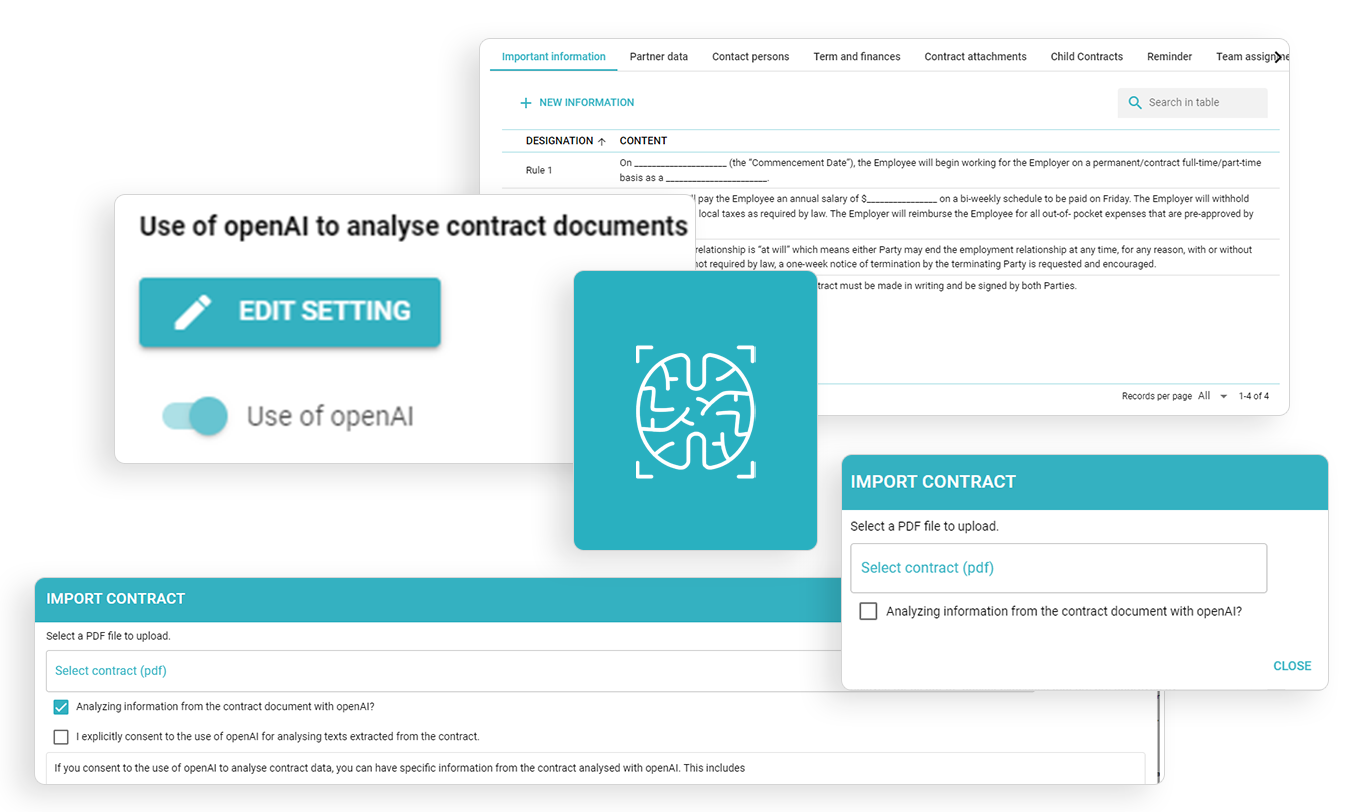
Scan with AI
Scan with AI and place common details automatically.
Available for all versions and possible to disable.
Contract Status Is More Than “Signed” or “Not Signed”
Another blind spot in SaaS contract handling is status visibility.
Teams often reduce contract status to binary logic:
-
Signed
-
Not signed
But reality is far more nuanced.
Contracts move through drafts, reviews, approvals, active periods, renewals, and expirations. Without clear visibility into these stages, teams operate on assumptions instead of facts.
A contract that is “almost approved” creates very different risk than one that is active. Without clarity, mistakes become inevitable.
Ownership: The Missing Layer in Contract Operations
One of the most common failure points in growing IT organizations is unclear ownership.
Everyone interacts with contracts, but no one truly owns them.
Who is responsible for tracking renewal timelines?
Who ensures obligations are fulfilled?
Who responds when a customer references a clause from six months ago?
Without explicit ownership, contracts become shared responsibility — which often means no responsibility.
Assigning ownership transforms contracts from passive records into active operational assets.
Scaling Across Europe Without Losing Control
As IT and SaaS companies expand across Europe, contract complexity multiplies. Different markets bring different compliance requirements, customer expectations, and regulatory frameworks.
Managing this complexity manually is not sustainable.
A structured contract system provides consistency across regions, without slowing down local teams. Contracts remain visible, controlled, and searchable — regardless of scale.
This is not about bureaucracy.
It’s about enabling growth without hidden risk.
[ROLE-BASED ACCESS CONTROL]
From Document Storage to Operational Confidence
High-performing IT and SaaS companies don’t treat contract management as a legal task. They treat it as infrastructure.
When contracts are structured, visible, and owned, teams move faster — not slower. Decisions are made with context. Renewals become strategic. Risks surface early.
Most importantly, leadership stops relying on assumptions and starts relying on data.
Contracts stop being something you react to.
They become something you control.
FAQs
Why do IT and SaaS companies struggle with contract complexity?
Because growth increases volume, variation, and regulatory exposure faster than manual processes can adapt.
Why aren’t shared folders enough?
They lack visibility, ownership, and automation — making proactive management impossible.
How can SaaS teams avoid missed renewals?
By embedding renewal tracking into workflows instead of relying on memory.
When should a SaaS company formalize contract operations?
As soon as contract volume and cross-team dependency increase.
You might also like